Why Does My Automatic Litter Box Smell? 9 Fixes That Work
Ammonia, urine or a stale smell from a self-cleaning box almost always has a fixable cause. Here's the order to check them.
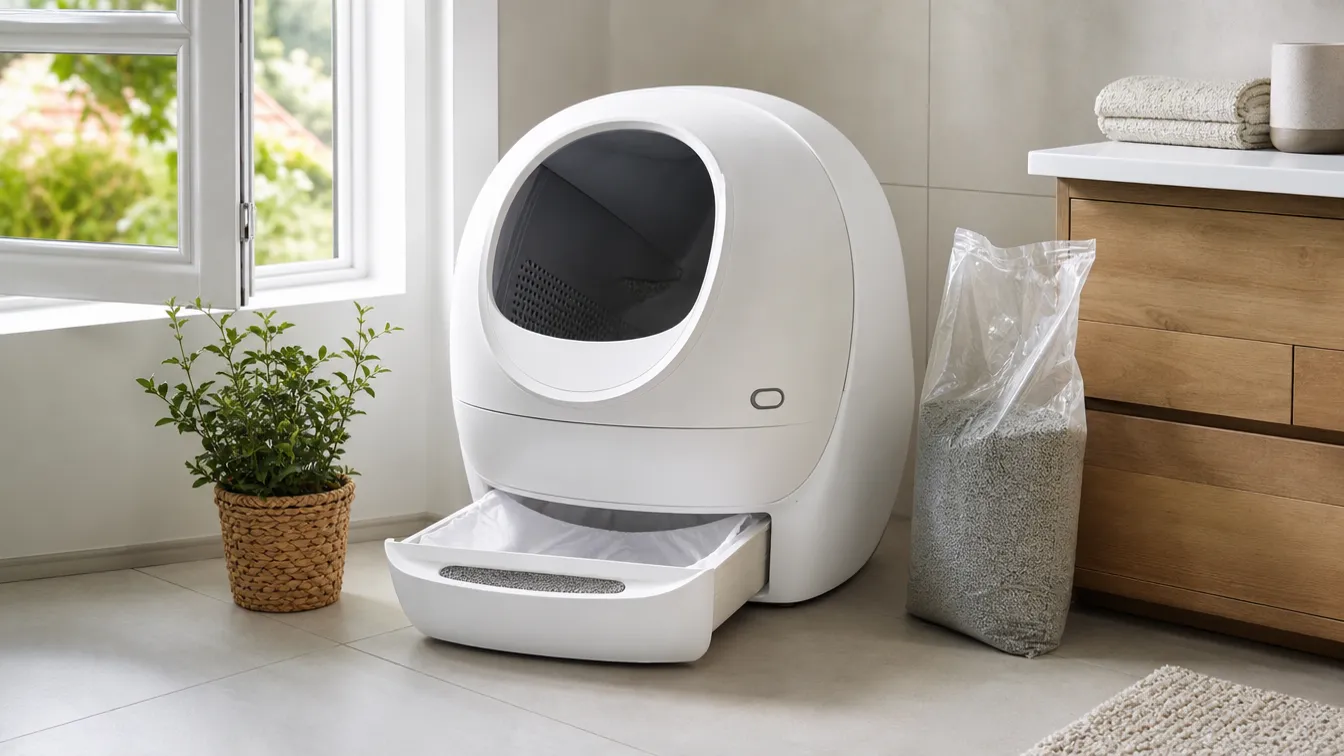
An automatic litter box usually smells because urine has soaked below the litter or past the liner, the waste bin is too full, the filter is spent, or the litter doesn't clump fast enough. Work through the fixes below in order; most smells are gone after the first four.
1. The litter is too low
If litter is below the fill line, urine reaches the drum floor and soaks in before it can clump. Top up to the line.
2. The litter doesn't clump fast enough
Automatic boxes need fast, hard-clumping litter. Soft clumps break apart in the sifting cycle and leave urine-soaked crumbs behind. Switch to a premium clumping bentonite or a compatible mineral litter.
3. The waste bin is overdue
Rated capacity assumes one cat. With two or more, empty more often. A box with a large bin, such as the 15L bin on the Cumrige M2, gives more headroom, but no bin should sit full for days.
4. Urine leaked under the liner
Sideways peeing or a torn liner lets urine collect in the base. Pull the drum or tray, wash the base with an enzyme cleaner, and replace the liner. Some owners report thin stock liners tearing; a sturdier liner helps.
5. The filter or deodorizer is spent
Carbon filters and deodorizer packs lose effectiveness over weeks. Replace on the manufacturer's schedule, sooner with multiple cats.
6. The drum needs a deep clean
Every 2–4 weeks, empty all litter, wash the drum with mild unscented soap and water (avoid bleach or strong scents that may put your cat off), dry fully and refill.
7. The cycle delay is too long
A very long delay leaves waste in open litter. Shorten it to 3–7 minutes once your cat is comfortable.
8. Poor placement
A closet with no airflow concentrates ammonia. Move the box somewhere with some ventilation, away from heat sources.
9. It's your cat, not the box
Unusually strong urine odor, more frequent visits, or very large clumps can signal dehydration, a urinary infection, diabetes or kidney problems. If your box logs visits, compare with previous weeks and call your vet if anything changed.

A simple odor-free routine
- Weekly (or sooner): empty the bin, check litter level.
- Every 2–4 weeks: deep clean the drum, wipe sensors.
- Monthly: replace the filter or deodorizer.
Choosing a box with strong odor control? See how our picks compare in the comparison table.